MS Mechanical Science and Engineering · UIUC
Prachit
Gupta
Robotics, control, and safe autonomy.
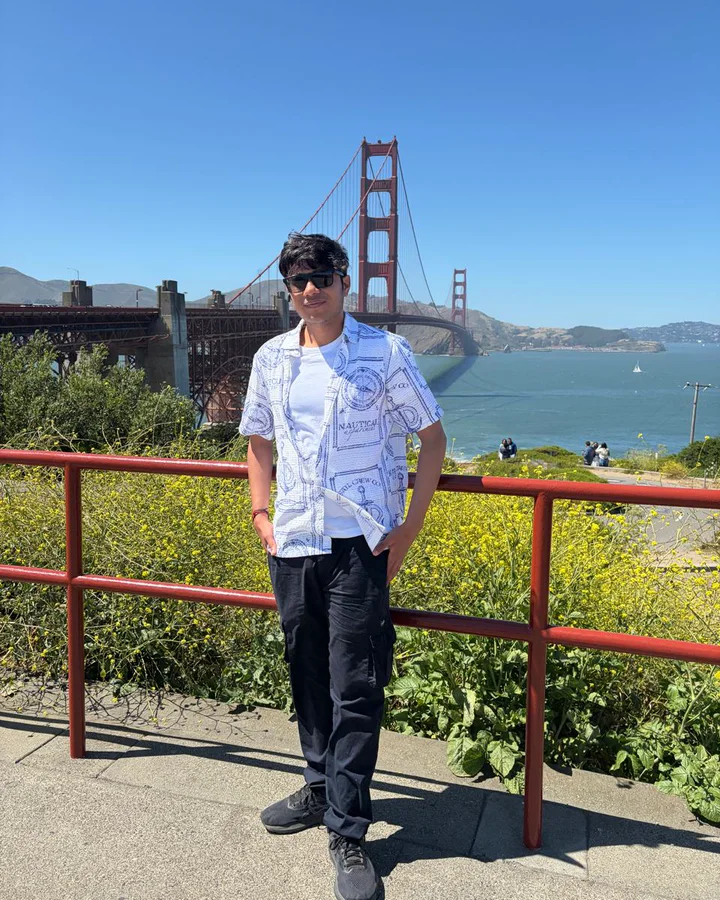
San Francisco, California
Safe autonomy · Robotics
01 / About
Building robots that are useful, intuitive, and safe.
Hi, I'm Prachit Gupta, a Master's student in Mechanical Science and Engineering at UIUC and a graduate researcher at the N-ACXIS Lab in Aerospace Engineering.
My research focuses on making autonomous systems safe, trustworthy, and capable of behaving in ways that mimic human-like decision making. As autonomous systems become increasingly common around us, I believe it is paramount that they remain provably safe and trustworthy for the people who interact with them, even if they have no understanding of how the underlying technology works. More recently, I have been exploring how foundation models such as Large Language Models (LLMs) can help realise that broader goal.
I primarily work with aerial drones and am expanding these ideas to a variety of robotic platforms, including flapping-wing drones, spider-inspired robots, hexarotors, and ground vehicles. My research is inherently interdisciplinary, bringing together ideas from mechanical engineering, aerospace engineering, controls, robotics, machine learning, and computer science.
Safety-critical control
Multi-agent autonomy
Foundation models
Aerial robotics
02 / Publications
Publications
Diffusion-Guided Learning of Graph Barrier Functions for Safe Distributed Multi-Robot Control
Under review ICRA 202703 / Research
Research experience
Ordered by current research priority, with animations highlighting implementations and experiments.
Stop-sign demo · 0:25–1:00
01
UIUC · Prof. Hiroyasu Tsukamoto · 2026—Present
Statistical Contraction for LLM-Based UAV Planners
Derived probabilistic safety bounds with conformal prediction for a fine-tuned LLaMA-8B UAV planner, certifying incremental exponential stability to an optimal trajectory via contraction theory. Integrated the planner with closed-loop control for intuitive language communication and semantic scene awareness, then demonstrated natural-language task execution on Starling 2 in cluttered indoor environments using probabilistic tubes with a 0.24 m safety radius calibrated at 90% coverage over 2,000 samples.
ICRA 2027 · 2:41–3:00
02
UIUC · Prof. Naira Hovakimyan · 2025—Present
Diffusion-Guided Learning of Graph Barrier Functions for Safe Distributed Multi-Robot Control
Devised Graph Barrier Diffusion (GBDiff), a framework that combines model-based diffusion with graph barrier certificates to reason about finite-horizon, actuator-constrained multi-robot interactions. Safe diffusion-generated controls are distilled into a multi-head GNN policy that is jointly learned with safety certificates. The approach achieved an empirical 99% safety rate across varying agent counts, topologies, and dynamics, and was deployed through Crazyswarm on eight Crazyflie UAVs for symmetric position swaps in settings where traditional QP-based controllers encountered deadlock.
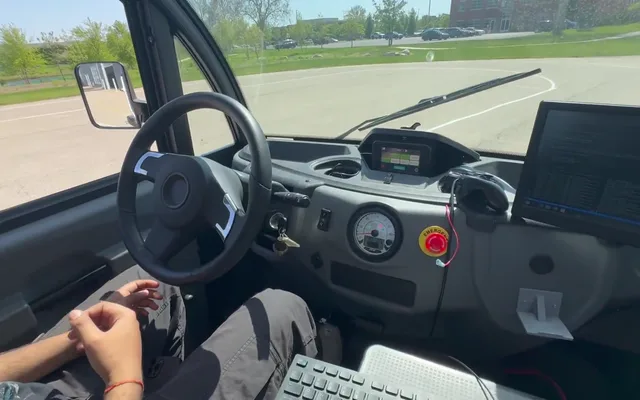 GEM e2 hardware · 0:00–0:10
03
UIUC · Prof. Sayan Mitra · 2026
Perception-Aware Planning and Control for the Polaris GEM e2
Built a perception–planning–control stack with ERFNet lane segmentation, bird's-eye-view geometry, ZED2/YOLOv8 perception, and stop/resume behaviors. Formulated a moving-lookahead Frenet MPC with obstacle constraints and deployed lane perception, Pure Pursuit/PI, and PACMod drive-by-wire on the GEM e2.
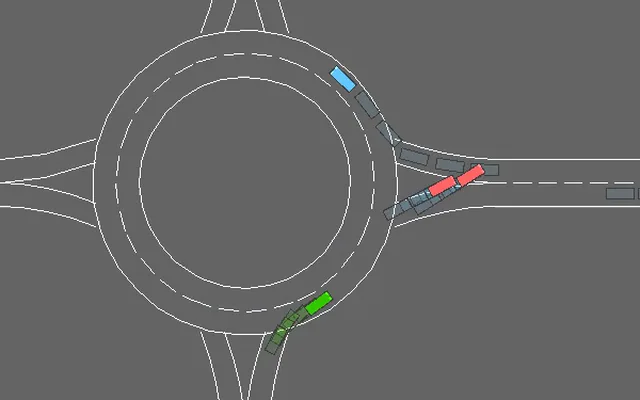 Intelligent-driving simulation
04
IIT Bombay · Prof. Mayank Barnwal · 2024—2025
Teaching RL Agents Human-Like Driving with LLMs
Used large language models to optimize reward functions for Deep Q-Network agents through human-centric feedback. The resulting action surrogate achieved 93.7% held-out accuracy and 96.2% F1, producing human-like speed selection, safe merging, and restrained lane changes.
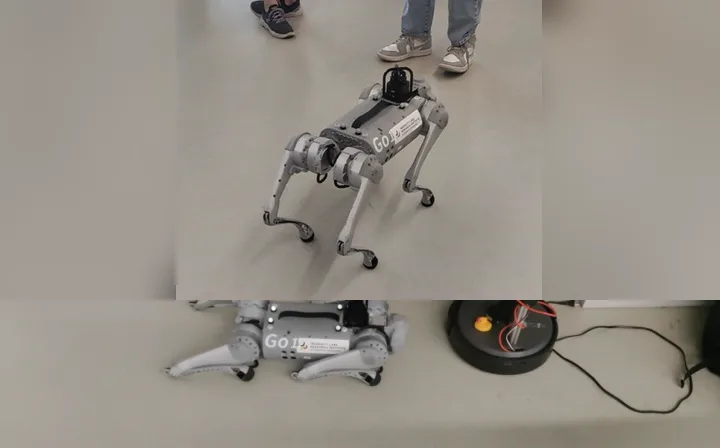 Unitree GO1 + TurtleBot 4
05
Queen's University · Prof. Matthew Pan · 2024
Safewalk Robotics
Developed ROS/ROS 2 perception and control stacks for socially aware person following on Unitree GO1 and TurtleBot 4 platforms. Combined pose and depth cues with a hybrid supervised-learning/RL policy robust to occlusion and detector uncertainty.
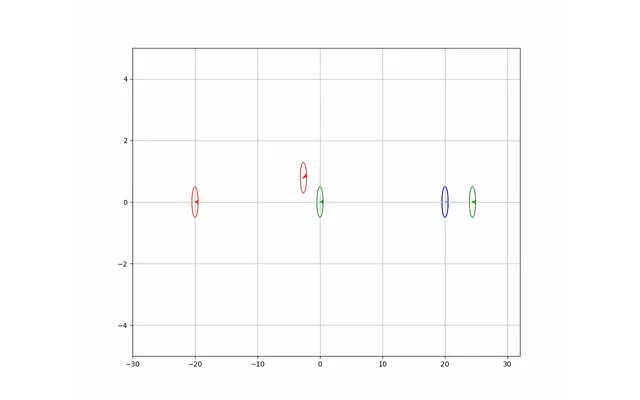 Formal verification simulation
06
IIT Bombay · Prof. Arpita Sinha · 2023—2024
Formal Safety for Autonomous-Vehicle Interaction
Computed Hamilton–Jacobi avoid sets as viscosity solutions of HJ PDEs to formally verify safe human–robot interaction. Embedded those reachability certificates in an MPC overtaking controller posed as a zero-sum differential game against adversarial driver behavior.
04 / Key Projects
Key projects
Selected systems spanning aerial robotics, autonomous vehicles, embedded control, and safety-critical autonomy.
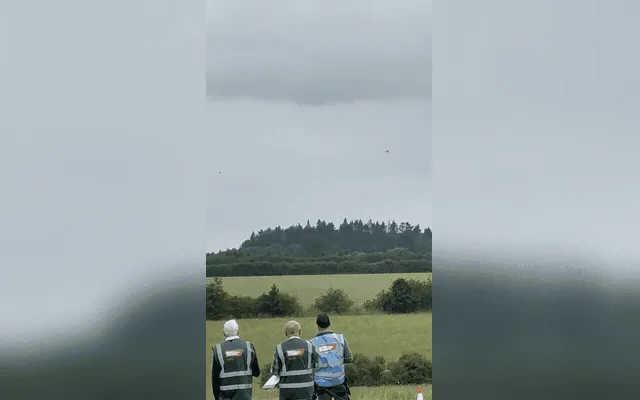 Competition flight hardware
01
United Kingdom · 2023—2024
UAS Challenge · Flight System
Led development of a 7 kg relief-operations UAV with a modular payload architecture and more than 20 minutes of flight endurance. The system won Best Design, Scrutineering, and Advancement awards as the competition's top newcomer.
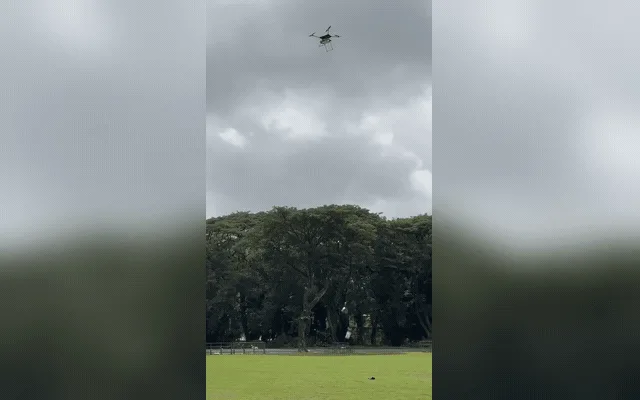 Payload-drop hardware
02
Team Aerove, IIT Bombay · 2023—2024
UAS Challenge · Autonomous Payload Drop
Integrated Lua, Pymavlink, Raspberry Pi GPIO, and custom actuation hardware for reliable autonomous payload deployment. The hardware loop below captures the payload-release sequence during outdoor flight testing.
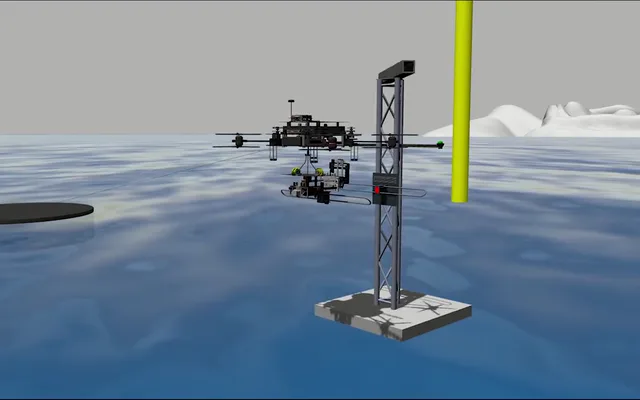 Simulation round · World No. 1
03
Team Aerove, IIT Bombay · 2021
IARC Mission 9 · World-Champion Simulation
Team Aerove placed World No. 1 in the IARC Mission 9 Simulation Challenge, validating coordinated mother-and-daughter UAV behavior and module detection in a mission-scale virtual environment.
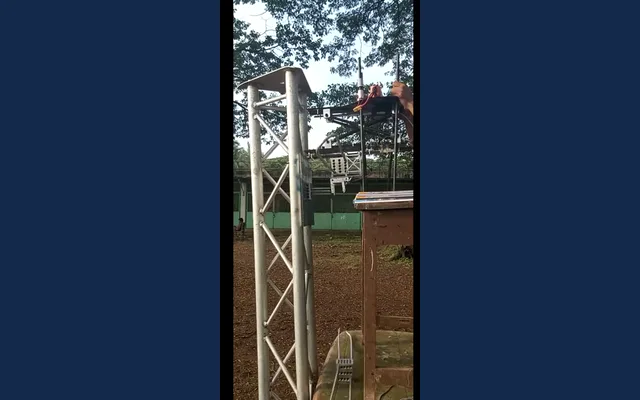 Replacement mechanism hardware
04
Norway · 2022
IARC Mission 9 · Autonomous Replacement System
Engineered circuitry, embedded C software, and a custom EAGLE PCB for Audrey’s autonomous replacement-and-gripper assembly. The coordinated mother-and-daughter drone concept earned a Special Mention in the hardware round.
05 / Awards & Recognition
Awards and Recognition
Fellowships, international competition honors, and national academic distinctions.
Mitacs Globalink Fellowship
Awarded the Canadian government–supported fellowship to conduct research at Queen’s University in Kingston.
IMechE UAS Challenge 2023
- Design Award — rigorous engineering approach and a well-resolved aircraft.
- Scrutineering Award — a safety-standards-compliant, well-built, and supportable UAV.
- Advancement Award — highest-scoring first-time team at BMFA Buckminster, UK.
IARC Hardware Challenge · Special Mention
Earned a Special Mention in the unsolved IARC Mission 9 hardware round for a novel coordinated mothership-and-daughter-drone concept.
IARC Mission 9 · World No. 1, Simulation Round
Contributed as a mechanical engineer to Team AeRoVe’s world-winning Mission 9 simulation entry.
JEE Advanced · All India Rank 917
Ranked 917 among 150,000+ candidates in an exam widely cited as the world’s second toughest.
JEE Main · All India Rank 388
Ranked 388 among 1.4 million+ applicants nationwide.
KVPY Fellow
Awarded the fellowship after finishing in the top 3% of 97,000+ applicants.
06 / Education & Teaching
Education and Teaching Experience
Academic training and teaching experience across UIUC, Queen’s University, and IIT Bombay.
2025 — 2027
University of Illinois Urbana-Champaign
MS, Mechanical Engineering · GPA 4.0/4.0
2025 — Present
Teaching Assistant · TAM 335 Fluid Laboratory
Solely managed the summer offering for 50+ students and independently ran three laboratory sections across three consecutive semesters.
2024
Queen's University
Research Intern at MITHRIL Ingenuity Lab.
2021 — 2025
Indian Institute of Technology Bombay
BTech, Mechanical Engineering · Minor in Systems and Controls · Technical Advisor, Team Aerove at UMIC.
07 / Contact
Let’s build safer autonomy.
I am always glad to discuss research in control, robotics, multi-agent systems, and foundation models.
prachitgupta30@gmail.com